
by Glotime | Jan 22, 2016 | Featured, Glo Arts & Entertainment
This week on GloTIME we have been talking a lot about the stars of stage and screen and the Oscars and the Grammies. Now it is time to get back down to earth and take a tip from our Grannies.
They say the best remedies are the ones handed down from our ancestors, and remembering hours of happy times in my own Grandma’s kitchen, I would like to share some of her special tips along with other great vintage solutions.
Ten top tips:
- When cleaning steel cutlery, add a little bicarbonate soda to take off those extra stubborn stains.
- Red Wine stains can be removed by pouring salt over the area and leaving for several hours.
- Candle wax spilled on clothes or furniture can be easily eradicated by ironing over the offending area with thick brown wrapping paper – the wax will be absorbed into the paper. For excessive damage, repeat the procedure until all the wax is removed.
- A dab of toothpaste is recommended for stubborn stains on clothes and crayon marks on the walls.
- Ballpoint ink marks can be removed by rubbing them with a dab of clear alcohol.
- Clean laminates with baking soda and water paste on stains for 10 to 15 minutes and wipe up with a wet cloth
- Pots and pans that are stained can be cleaned with white vinegar, soak them for thirty minutes or more and then rinse in hot soapy water.
- Add a few drops of olive oil into hard water which will make the soap lather easier and keep the skin from getting rough.
- Ketchup is amazing when cleaning copper pots and pans – they come up a treat.
- Peanut butter is a great remedy for removing labels and stains from glassware and porcelain dolls or ornaments.
- We would like to hear from you with any special ‘hand me down’ tips that we can share on GloTIME. After all, we can all do with a little help from our Grans. Ooops I can feel a song coming on
by Dee | Jan 21, 2016 | Featured, Glo Arts & Entertainment
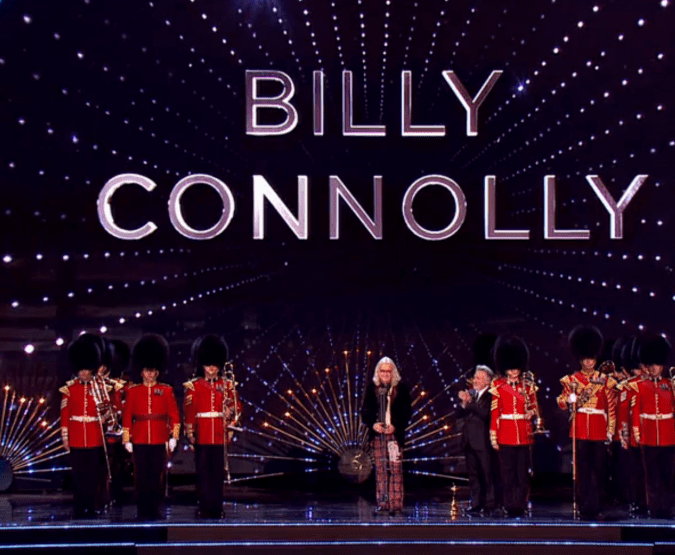
The National Television Awards which took place at the O2 last night, was brilliantly hosted by Dermot O’Leary and paid tribute to the industry greats from the British Public votes.
The usual programmes and presenters such as Downton Abbey, Eastenders and Ant and Dec were recognised and rewarded, but the night was completely turned on its head when our legendary Billy Connolly was presented with the Special Recognition Award by International Icon Dustin Hoffman.
Now suffering from Parkinson’s disease, our iconic comedian braved the steep climb to the stage alone. He delivered sharp witty dialogue in spite of his physical disadvantage and brought tears to our eyes as he bantered true Connolly style with his fellow artists.
The standing ovation from the entire audience of superstars and supporters was evidence of his long standing successful career as a comedian, presenter and movie actor and how much he is loved.
Our very own Judy Dench stood witness to his sensitivity and gift for putting fellow performers at ease, and Dustin Hoffman also paid homage to the talent of the man.
The night was fun and entertaining, but it left me with a question and investigation into this debilitating disease. Parkinson’s is still a mystery, its causes are still unexplained and the disease has affected so many prominent figures in entertainment and the public eye.
Johnny Cash and fighter Muhammad Ali, evangelist Billy Graham who is still alive at 94, singer Linda Ronstadt and the late Bob Hoskins are all victims of Parkinson’s and many many more.
I am not here to spoil the occasion, but like anything we do not want to face, we tend to sweep it under the carpet. Seeing someone we know and love like Billy Connolly has brought it to our attention, and perhaps has helped in some way to make inroads into combatting this devastating disease.
Please go to www.parkinsons.org

by Dee | Jan 20, 2016 | Featured, Glo Arts & Entertainment
We have so much media pressure to defy the ageing process and maintain eternal youth.
Models in magazines are airbrushed to look a size zero, with the promise that if we achieve this unattainable goal, we will meet our prince and live happily after. This is of course complete fantasy and one that has been blamed for a multitude of conditions in young women, bulimia especially.
So what are we doing to prevent this insanity which in spite of the bad PR, still reigns in our glossy magazines.
On the other hand, it is also propagated that we have moved on in so many ways. Those who are of a certain smaller than average height are no longer on display as circus freaks or referred to as midgets, and others with disabilities or conditions such as epilepsy are no longer shamefully locked away by their embarrassed parents at birth (it even happened in our Royal Family).
There was an issue this week with a female who had served in the Army for a number of years, and had suffered severe stress through exposure to terrifying events abroad. The Army had ignored her pleas of help as her mental state deteriorated, and refused to help her. So have we really made that much progress?
Our very own Idris Elba in parliament this week was speaking out about racism within the film industry. Fortunately, Idris has made his mark as the unforgiving Luther in the named series. Let us hope that this penetrates the crusty walls of the walk of fame and will kick some grit in the faces of the offenders.
Turning the ‘freak show’ repulsion on its head, it would be good for you to google Actor and Presenter Adam Pearson, who suffers with the rare condition neurofibromatosis. Adam journeyed across America to explore the world of freak shows for a new BBC3 documentary. His tales of meeting people who use their medical conditions to educate, entertain and make money, and to explain how his opinion on exploitive side shows has changed after meeting these extraordinary people.
Another great book for you to read is by campaigner Rosie Moriarty-Simmonds biography Four Fingers and Thirteen Toes, whose account of growing up in the fifties having been affected by Thalidomide, is both emotional and inspiring.
I was so happy to see the Thalidomide story was covered in this week’s Call the Midwife. Producers used Rosie Moriarty-Simmonds’ biography to help with the plot after she wrote to demand the BBC drama tackled the subject.
The issue of respecting our differences is a complex issue, and one that raises the question time and time again – how do we define normal? We would like to hear from you with any experiences or opinions on this emotive subject, after all it is now in our hands.

