Toppings of your choice, we chose Maple Syrup and crispy bacon, but works just as well with fruit and ice cream
Instructions
Mix the milk, egg and melted butter in a bowl, until smooth and blended.
Sift together the flour, cornmeal, salt and bicarb and gently stir into the buttermilk only until the ingredients are moistened - don't worry about the lumps.
Heat a non-stick pan until medium hot. add a little clarified butter.
Add a tablespoon of batter onto the pan and spread slightly with the back of the spoon.
Cook until the bubbles rise and break on the top of the pancake.
Flip pancake. Cook until pale golden on the other side.
Remove and keep warm. Continue until all the batter has been used.
Spread each pancake with butter and serve a stack of three per person.
The ways in which people, including those who identify as LGBT, can create a family, have evolved greatly over the years. Modern families are wonderfully diverse, and it is a huge positive, that society is more accepting of different family structures. Jemimah Fleet, family solicitor at B P Collins, who specialises in modern parenting, offers advice on the routes available to creating a family.
Surrogacy
Surrogacy is a way of building a family where a woman, who does not intend to be the baby’s mother, carries and gives birth to a child for someone else, whether that’s a single mum or dad, heterosexual couples or same sex couples.
Surrogacy is possible both in the UK and in some countries around the world. Currently the Law Commission is reviewing the UK’s outdated surrogacy laws, which do not meet the interests of those involved in the process. For example, there are various legal obstacles such as the surrogate (as the birth mother) is always considered the legal mother and the intended parents can only apply to court for a parental order, to be recognised as their child’s legal parents, once the child is born. This inevitably places the child in an uncertain legal limbo until legal matters are resolved. This process can take months to finalise – a delay which is both frustrating and creates uncertainty.
The Law Commission’s consultation will help to reform the law which hasn’t changed in decades and aims to ensure the child’s best interests remain the key focus and provides reassurance to all those involved on the surrogacy journey.
Donor conception
Many parents also choose to build their families through donor conception, particularly single women and lesbian couples, who conceive with a sperm donor.
A clinic sperm donor may be chosen, where the clinic will match with a donor who is anonymous at the point of donation. The law surrounding anonymity changed in 2005 and identifiable information is now available to children, who are conceived with donor sperm, if conception was in the UK.
Some may choose to use a known sperm donor, who could be a friend or family member. A key advantage is that there may be a continuing relationship with the donor and you will have more background information about them. But the relationship and the intentions of the donor may need to be managed carefully. Having a pre-conception agreement on the arrangements moving forward, which could vary from minimal involvement to full co-parenting, could be invaluable and hopefully avoid a dispute in the future.
It’s important to remember that legal parentage can be more complicated in these arrangements as the law only allows two legal parents. The birth mother will always be the mother but identifying the second parent will depend on the circumstances of conception. It is vital to seek expert advice to ensure that the full legal position concerning parentage is understood.
Co-parenting
B P Collins work with many clients embarking on a co-parenting arrangement, which are usually single women or men; or sometimes friends deciding to conceive a child together. There has also been a surge in people “self-matching” online, having a child together, but continuing to live separately and co-parent. In a similar way to donors, the relationship between co-parents needs to be managed very carefully and we would advise creating an agreement to ensure expectations are aligned. This will again help to avoid disputes in the future and establish a strong foundation for raising the child.
More than two decades ago I had a conversation with the lovely Actor, Alison Steadman, who was then married to legendary Film Director Mike Leigh. They were already heavily into promoting environmental issues of pollution and waste, and educated me into the hazards of buying coloured loo paper, saying it was non-biodegradable. I have bought the white stuff ever since.
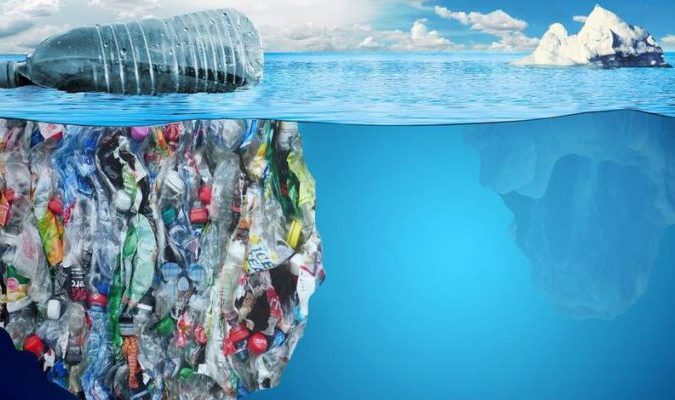
So where did it all go wrong, and why is it only now we are being made aware of the amount of plastic in the World’s oceans, which is set to treble in the next decade unless drastic action is taken to prevent it.
We have been warned that plastic is one of the most enormous threats facing the world’s seas, along with metal and chemical pollution.
It has apparently been swept under the carpet or beds of the Ocean for decades, and now only as it is now at danger level are we on high alert where our sea waters are concerned.
The Netherlands, who are famous for their environmentally friendly approach, have led the way by opening the World’s first plastic-free supermarket aisle and other Nations are encouraged to follow.
But we need to take it further and take control through research and awareness before the problem escalates even more.
Louise Edge, Senior Oceans campaigner at Greenpeace UK warns us “Plastic pollution is one of the greatest threats facing our oceans, with items ranging from whole plastic bottles to tiny microplastics being found in seas all around the world”.
“If strong action isn’t taken now, the problem will get exponentially worse. More research is needed on the many different facets of plastic pollution, but it is already clear that we must end our relationship with throwaway plastic and find alternative packaging solutions which won’t harm our environment.”
Professor Edward Hill, executive director of the National Oceanography Centre, said it was time to change the “out of sight, out of mind” attitude to the world’s oceans.
He said the Blue Planet television series has helped people visualise what is going on in the oceans, provoking both wonder at what is down there and horror at the impact humans are having.
“It’s this sense of the unexplored world on our own planet, but also it’s important to us. We know less about the bottom of the sea than the moon or Mars, but nothing lives on the moon or Mars, but things live in our ocean and they’re vitally important to us,” he said.
If we want to contribute to the awareness of this alarming discovery, we can make a difference by creating plastic free awareness in our own homes, and pass the knowledge onto our kids, so that they lead by example. If you click onto www.plasticfreetuesday.com, it will give you some great tips for the start of your own plastic free awareness campaign.
September 25, 2026 1872 William Faulkner 1929 Ronnie Barker 1944 Michael Douglas 1946 Felicity Kendall 1951 Mark Hamill 1952 Christopher Reeve 1961 Heather Locklear 1968 Will Smith 1969 Catherine Zeta Jones
Pin It on Pinterest
We use cookies to ensure that we give you the best experience on our website. If you continue to use this site we will assume that you are happy with it.OkPrivacy policy